
How to Choose the Right Business Cards Printer for Your Australian Organisation
Discover how to choose the best business cards printers in Australia — covering paper stock, finishes, MOQs, turnaround times, and budgeting tips.

Written by
Lily Adams
Stationery & Office
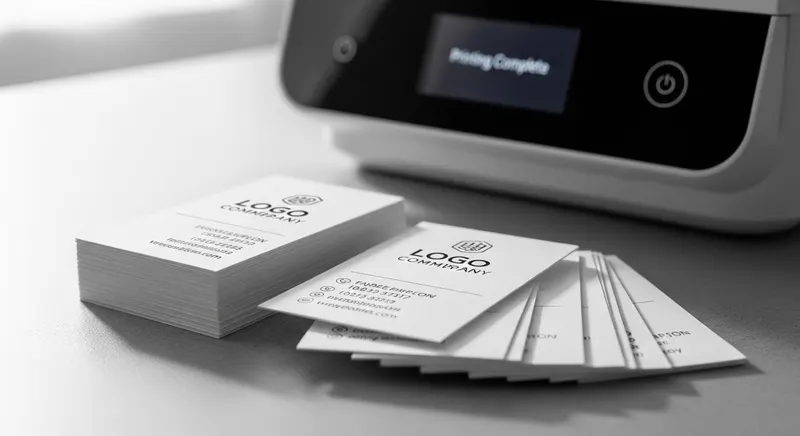
Finding the right business cards printer can feel surprisingly overwhelming, especially when you’re juggling tight deadlines, brand guidelines, and a budget that needs to stretch across multiple marketing priorities. Whether you’re a Sydney-based startup ordering your first run of cards, a Melbourne corporate team refreshing your brand collateral, or a Brisbane school preparing faculty cards for the new academic year, the choices are significant — and the wrong decision can cost you time, money, and brand credibility. This guide breaks down everything you need to know about working with business cards printers in Australia, so you can approach your next order with confidence.
Why Business Cards Still Matter in 2026
In an era of digital networking and QR codes, you might wonder whether physical business cards are still worth the investment. The short answer is: absolutely. Research consistently shows that a well-designed, high-quality business card leaves a lasting impression that a LinkedIn connection request simply cannot replicate. The tactile experience of receiving a beautifully printed card — with a smooth matte laminate or a luxurious soft-touch finish — creates a moment of genuine brand engagement.
For Australian organisations, business cards serve a particularly important function at trade shows, expos, client meetings, and networking events. A Gold Coast real estate agent, a Canberra government contractor, or a Perth healthcare provider all benefit from cards that communicate professionalism at a glance. And when you combine business cards with a broader branded merchandise strategy, they become a cohesive piece of your overall brand story. To understand how cards fit into the wider world of branded items, it’s worth reading our beginner’s guide to what merch actually is.
Understanding the Different Types of Business Cards Printers
Not all business cards printers operate the same way, and understanding the landscape helps you make smarter decisions.
Digital Printing
Digital printing is the most common method for business cards and suits smaller quantities with quick turnaround requirements. Files are sent directly to a digital press, meaning there are no printing plates and no lengthy setup process. This makes it cost-effective for runs as low as 50 to 250 cards. The quality has improved enormously over the past decade, and modern digital presses can reproduce vibrant colours and fine details with impressive accuracy.
Offset Printing
Offset printing is the gold standard for large volume orders where colour accuracy is non-negotiable. If your brand uses specific PMS (Pantone Matching System) colours, offset printing offers superior consistency across thousands of cards. The setup costs are higher — you’re paying for plate creation — but the per-unit price drops significantly at volume. Organisations ordering 2,000+ cards across multiple staff members will generally find offset printing delivers better value and sharper results.
Letterpress and Specialty Printing
For premium business cards that genuinely stand out, letterpress printing creates a debossed impression in the card stock that gives a tactile, artisanal feel. Similarly, foil stamping adds metallic elements to logos or typography. These specialty methods command higher price points and longer turnaround times, but they’re worth considering when your brand positioning demands something truly distinctive.
Key Factors to Evaluate When Choosing Business Cards Printers
When you’re comparing business cards printers, there are several critical factors beyond price that will determine whether you get a result you’re proud of.
Paper Stock and Weight
Card stock is measured in GSM (grams per square metre). Standard business cards typically use 350–400 GSM, which gives a sturdy, professional feel. Premium cards can go up to 600 GSM or beyond with layered construction. Thicker cards communicate quality — they don’t bend when tucked into a wallet, and they hold their finish better over time.
Common finishes include:
- Gloss laminate — Vibrant and eye-catching, ideal for image-heavy designs
- Matte laminate — Sophisticated and fingerprint-resistant
- Soft-touch laminate — A velvety, premium feel that’s increasingly popular in 2026
- Spot UV — A high-gloss coating applied selectively over matte for contrast and impact
Colour Accuracy and PMS Matching
If your brand has specific Pantone colours, confirm upfront whether the printer supports PMS matching or works exclusively in CMYK. Digital printing converts to CMYK by default, which can cause slight colour shifts. For organisations with strict brand guidelines — government departments, franchise networks, or universities — this is a non-negotiable conversation to have before placing your order.
Artwork Requirements
Most reputable business cards printers will require your artwork at 300 DPI resolution in a print-ready format (PDF, AI, or EPS). They’ll also specify bleed requirements — typically 3mm on all sides — to ensure designs that extend to the card edge don’t leave unwanted white borders. If you’re working with an internal design team, brief them on these technical specs early to avoid revision delays.
Turnaround Times
Standard turnaround for digital business card printing in Australia is typically 3–5 business days from proof approval, though express options of 24–48 hours are available from many printers at a premium. Offset printing generally requires 7–10 business days. Always add buffer time if you’re preparing for a specific event, conference, or exhibition.
Minimum Order Quantities
MOQs for business cards are generally low compared to other promotional products. Most digital printers will accept orders from as few as 50 cards, while some online services start at 250. If you’re ordering for a large team, bulk pricing tiers typically kick in at 500, 1,000, and 2,500 units — so it’s worth consolidating orders across departments when possible.
Business Cards for Schools, Corporate Teams, and Events
Schools and Educational Institutions
Schools ordering faculty business cards need to consider consistency across departments. A Hobart secondary school, for example, might want a standardised template with consistent fonts and colours but individual staff details printed per person. Working with a printer who offers variable data printing — where personalised details change across a print run without resetting the press — is a major time-saver for education clients managing large staff rosters.
Corporate and Professional Services
Corporate organisations often use business cards as part of a broader suite of branded stationery and collateral. Cards should visually align with letterheads, email signatures, and branded items like notebooks, pens, and lanyards. For inspiration on how stationery fits into a complete branded merchandise programme, check out our guide to top-rated promotional pens in Brisbane.
Events and Conferences
Trade shows and conferences create a concentrated demand for professional cards. Delegates, exhibitors, and speakers all benefit from having fresh, on-brand cards on hand. If you’re managing event merchandise more broadly, it’s also worth exploring complementary products. For instance, custom wristbands for events are a great complement to business cards for access management at larger gatherings, and event wristbands can help streamline guest entry while reinforcing your brand presence.
Integrating Business Cards Into Your Broader Branded Merchandise Strategy
Business cards don’t exist in isolation. The most effective brand experiences come from consistency across multiple touchpoints — cards, apparel, drinkware, bags, and event giveaways all telling the same visual story.
If you’re running a corporate event in Sydney, for instance, consider pairing custom business cards with summer promotional products that attendees will actually use and keep. A branded card handed over alongside a quality keep cup or a custom water bottle creates a much more memorable interaction than a card alone.
For organisations with sustainability commitments, the choices extend to business cards as well. Recycled card stocks, soy-based inks, and FSC-certified papers are all available through reputable printers. If eco-friendly values are central to your brand, read more in our overview of sustainable promotional products and our guide to sustainable product options to see how those principles extend across your entire merchandise range.
When coordinating branded merchandise for your team, consider how other items complement your cards. Custom women’s polo shirts for work create a consistent professional image when your team is meeting clients face-to-face. Similarly, branded cooler bags and custom umbrellas with logos extend your brand visibility well beyond the initial handshake. For outdoor events or corporate retreats, wholesale umbrellas and premium blunt umbrellas are worth including in your merchandise mix. Even branded water bottles and sport water bottles keep your logo front and centre long after the first meeting.
Budget Considerations and Getting Value from Your Print Order
Business card printing is one of the most cost-effective forms of branded marketing when managed well. A run of 500 quality cards with matte lamination might cost between $80 and $150 from a reputable Australian printer, depending on the stock, finish, and supplier. That works out to less than $0.30 per card — a negligible investment for the brand impression it creates.
To maximise value:
- Order in bulk — The per-card price drops significantly at higher quantities
- Standardise templates — Reduces design time and setup costs across a large team
- Proof carefully — Errors caught before print save expensive reprints
- Ask about combo deals — Many printers bundle stationery items at a discount
Conclusion: Making the Most of Your Business Cards Printer Relationship
Choosing the right business cards printer is about more than just the lowest price per unit. It’s about finding a supplier who understands your brand standards, communicates clearly through the proof process, meets your turnaround requirements, and delivers consistent quality across every reorder. Australian organisations — from Darwin nonprofits to Adelaide universities — deserve print partners who treat every order with care, regardless of size.
Here are the key takeaways to guide your next business card printing project:
- Clarify your paper stock and finish before requesting quotes — these decisions significantly affect price and final quality
- Confirm PMS colour support if your brand has strict colour requirements, and always review a physical proof before approving a large run
- Consider variable data printing for schools and corporate teams ordering personalised cards across large staff groups
- Plan turnaround time carefully — build in at least 5–7 business days for standard orders, especially around peak periods like EOFY or the end of the school year
- Integrate business cards with your wider merchandise strategy so your brand presents consistently across every customer touchpoint, from the card in their hand to the branded item on their desk